Showing posts with label Himalayas. Show all posts

Tuesday, August 16, 2016

Day 11: Trying traditional Newari food at Patan, Kathmandu

Patan is another mini kingdom that was ruled by one of the three sons of Anand Mala when he divided the greater Kathmandu valley into three parts (Patan for one son, Bhakatapur for one son and Kathmandu for one son). It is a collection of Durbar Square (King's palace, courtyard), Temples, Carvings, and other features that were needed in a town including a massive bell (made of seven metals, the ringing of the bell could be heard for 3 miles around, effectively informing people of important gatherings at the main courtyard), sacrifice centers (!) amongst modern day buildings and hotels & restaurants. While Kathmandu was known as the kingdom/town of business, Bhakatapur was known as the town of potters and devotees. Patan, however, captures one imagination  as it was or rather is known as the town of fine arts. Metal work, paintings, masonry, the list of creative workmanships are endless.... In our guide's words, everyone here is involved in some form or other of Art work. But today, it's pretty much like what we saw in Bhakatapur - nothing different as the same shops, same kind of paintings and other things were there too for attracting the tourists.

While we did the usual sightseeing and 'appreciation tour', the highlight of the day was tasting local Newari food. I just fell in love with it (though we had to stay in front of the cooking area to ensure no non vegetarian or egg gets into it) as it actually resembled our dosa and pesarattu! It was yummy - the 'chokamari' (also called Nepali pizza, where ground rice and lentil flour is made into a dosa topped with veggies or non veg as per one's choice)  and 'bara' (ground black lentil again made into dosa - this one was exactly like pesarattu) that we tasted to the accompaniment of some spicy tomato chutney. Loved the Newari food much better than the traditional Nepali thali (called Dal Bhat) which more resembled a regular Indian thali consisting of rice, dal, sag/greens, sabzi/vegetables and curd.

Day 10: Pasupathinath, the national diety of Nepal

Pasupathinath, meaning the lord of all pashus (living and non living beings), is the most famous and sacred temple in the Hindu nation of Nepal. The bigger temple area is actually a collection of old ashrams, mini temples, matts (religious philanthropic centers that travellers can use to freshen up amongst other purposes), and stone inscriptions. The temple, built on the banks of the Bagmati River, attracts devotees by the thousands (or even millions) during the month of August (shravan) and Shivaratri. The day we decided to visit Pasupathinath was the last Monday of shravan, a day that is considered highly auspicious and visited by women who fast the entire month for the well being of their husbands;  on the last shravan Monday they seek the darshan and blessings of Pasupathinath, dressed in the colours of Red and Green denoting prosperity and well being, before breaking their fast. You can imagine how serpentine the queue must have been. It was about 2 or so miles long. There was no way we could get in let alone have the darshan of Mr. Pasupathinath. But there's no harm in imploring him. And when he decides to listen, his grace knows no bounds.

By a strange twist of situation, we found ourselves being enquiried by a police officer who wanted to know what we are doing near the temple complex looking at the crowd (we had walked quiet a bit alongside the queue hoping there might be a paid ticket counter or something). After ascertaining that we are indeed Hindus and with good intentions and from India, he actually let us in to the temple prahar and allowed us to join the queue as it entered into the temple boundaries from the streets below. What weird luck is this? Is cutting into the line not an injustice to all the ones who have been standing for so long? Before we even had time to consider these questions and feel bad (we will certainly not accept it if anyone cuts the queue back home), we were herded ahead by the crowd with no one seeming to mind us jumping in between. But my conscious didn't let me to settle - I was totally unnerved all along but didn't quiet know how I can make amends. But no time for all that - within about 5 minutes, we were in front of the main sanctom sanatorium and Lord Pasupathinath was in front of us. And it started pouring at exactly the same moment scattering the crowd here and there. With a great feeling of blessing and having been a subject of divine mercy, we moved to the Shankaracharya matt that was outside the temple complex to take shelter from the rain and meditate for a bit. As my guru says, whatever happens happens for the good; every moment is inevitable and to be cherished. These moments at Pasupathinath were certainly to be cherished for a lifetime.

Monday, August 15, 2016

Day 9: Visit to Jal Narayan and Swayambunath

Budhanilkantha or Jal Narayan as it's also called is a beautiful open air temple in Kathmandu where Vishnu is seen sleeping on Aadishesha (cosmic multi headed serpent) in the middle of a small pond. The name however comes out differently hinting at Buddha or Shiva (literal meaning of Budhanilkantha denotes Shiva aka blue throated) - but it is neither, as the reclining diety is very much that of Vishnu (the statue is believed to be over 1000 years old). It is said that the water of the pond in which Vishnu lies comes from a lake in which Shiva immersed himself after consuming the poison that came out from churning the ocean - hence the name Budhanilkantha. The sthala purana goes that a farmer and his wife accidentally discovered the statue while ploughing their field (in the process striking the toe of the statue causing it to bleed). Even today, the toe of the diety seems slightly damaged/missing (as said by our taxi driver but I couldn't see that myself). As interesting as the history of the place, the temple is also wonderfully calm, peaceful and filled with a serene energy. And it's devoid of the regular tourists.

To my delight, I also saw two Rudraksha trees in the premises as well as met a local hotel owner (who was selling Rudraksha in the side) who took the time to explain how he collects the fruits, dries them and makes the Rudraksha from the trees. It was nice to finally see the tree from where the holy seeds believed to protect one's aura comes from.

Our next stop for the day was at Swayambunath, the second most sacred place of workship for Buddhists in the Kathmandu valley (after Boudanath). This Stupa is also called as the Monkey temple as there are many monkeys in the premises. Another beautiful and calm place, Swayambunath and it's monkeys made me fondly recall the monkeys at Ramana Ashram at Tiruvannamalai that sat on me and fed from my hands. It was a wonderful experience for me that reiterated that Love is universal across species and boundaries. All in all, Budhanilkantha and Swayambunath made for a beautiful day.

Sunday, August 14, 2016

Day 8: Mount Everest, here I come!

Having come so close to the highest peak on Earth, how can one go back home without touching it? Mount Everest or Sagarmatha as it's called in Nepali and Chomulungma as it's called in Tibet has been known as the mountain of "Holy Mother" much before it captured wider human imagination and efforts at conquest to climb its peak. It has been believed that the Goddess Miyolangsangma, the Goddess of inexhaustible giving, lives on the Mountain and Chomulungma (meaning Holy Mother) is her home and playground. Knowing that many mighty peaks of the Himalayas are considered sacred and home to many Gods, both Hindu and Buddhists, it is only apt that the highest peak on Earth, at 8848 metres above sea level, must also be worshipped in a similar fashion. And having visited Manakamna recently which is not too far from the Everest, one wants to believe that there's a similar goddess ruling the latter. True or not, the cultural aspects, beliefs, and spiritual significance associated with these Mountains, specifically the Everest, Kailash (or the ones I have had the fortune to visit recently including Manakamna and Muktinath), or even mountains in general, is definitely highly interesting for me. Much more interesting than just thinking them of as scales of human climbing achievement and display of courage and toughness. Perhaps if the belief about the Goddess on Everest would have been more wide spread and prevalent, I might have been more compelled to climb (attempt that is) it's peak myself. But what to do? The endless fascination with Himalayas tempts one to visit the mighty big mountain of this range however one can so off we must go on the expedition to Sagarmatha (I somehow love this name and prefer this to the more famous Everest) irrespective of whether a Goddess rules it or not. 

My first fascination with climbing the Mount Everest got triggered last year when I watched the movie of the same name. Based on a true life narrative of the 1996 summit attempt and the human struggle to survive all odds, the movie moved me to great levels. I dared to think, in the the corner of my mind, what it would be to undertake a similar expedition as the climbers portrayed in the movie. Even the mere thought of me attempting to climb the Everest, let alone to its peak, or say even trek to its base camp, was laughable (even to me!!) till last year. But not anymore. Perhaps, just perhaps, I might come back and trek to its base camp in the future. For now, a mountain flight to Sagarmatha must suffice. 

Off we went to the Airport early morning the second day in a row (as the flight got cancelled due to the weather on the first day - oh it was so highly disappointing). An hour or two of nail biting followed with fervent prayers offered to the weather God and imploring the Goddess Miyolangsangma to allow us to visit and view her from the top (at a respective distance though). And she conceded. Soon we were off from the Kathmandu airport in an 18-seater flight, speeding towards the snow clad peaks visible in the distance. It was a beautiful day - cloudy in places - but bright and beautiful. All eyes were glued to the windows as the air hostess handed out 'route maps' and the pilot rolled off names of the many peaks we cross before we come to THE mountain - Shubha Pangma (8013 mtrs), Gauri Shankar (7134 mtrs), Chugimago (6297 mtrs)...... And then she rose up high magnificently, like an ethereal being - Sagarmatha. She didn't really need the air hostess or the pilot to point her out to us. By now, the cloud cover was so thick that we could see nothing at all of the ground or the mountains. But there she was - the only peak (or the twin peaks along with Lhotse at 8516 mtrs) visible, raising high above the clouds. It looked like Mother Nature created her most precious jewel and decided to store it amidst the soft folds of the thickest cotton to perseve it's beauty for an eternity. So regal, so awe inspiring, so out of this world.... Sagarmatha, thank you for allowing me a glimpse of your wonder today.

As they said, I might not have climbed the Everest but I touched it with my heart (the cheesy line from the Airlines promo!). 


Day 8: Impressions of Thamel, Bhakapur, and Kathmandu

If you have been living amidst the serenity of the mountains for more than a few days, you don't really want to return to the chaos of civilisation. Whatever beauty that man tries to build, whatever magnificence that he tries to mimick, whatever awe he hopes to create... everything will be a pale comparison to what the Nature so effortlessly (or so it seems) puts together. So when I tell you that I didn't really dig Thamel or Bhakatapur, I hope you will get the right perspective. Thamel is the place where most tourists on a budget stay at Kathmandu. It very much resembles the Avenue Road area at Bangalore or the Parry's Corner at Chennai. Narrow lanes crammed with hotels and shops, people moving about looking like they know where they are going, police keeping a tab here and there....and the inevitable dust, controlled chaos and energy typical to such places. One can't wait to get out of the lanes to the calm and comfort of their hotel room. But hey, that's my opinion - otherwise, I think, the wider world thinks Thamel is a charming little place friendly on the discerning traveller who wants to feeeeeel the 'culture'.

Budget hotels, Souvenir shops, AtoZ stores, ever willing to help local folks, 'authentic' feel and so on and so forth....what's not to like, eh? Uh, sure, if you say so. As for me, I hate being surrounded by eye candy that you can't afford to buy (not necessarily because of the price but baggage limitations and self imposed mental restraint :p). They are a constant reminder of human need to 'build a home' and 'fill it with beautiful but useless things'. Oh, the turquoise necklace there, the rudraksha bracelets here, the smiling Buddha there, gory masks here, Yak bells there, prayer wheels here, bags there, cute little woollen hats here.....oh, so tiring just to look at them all and simply admire, forget about acquiring them to 'remember my trip to Nepal' back home. One day should suffice to take all that 'beauty' in. I am staying here for five days.... you can imagine my daze!

Bhakatapur is about 17 kilometres or so from Thamel. It's a 700 year old ancient city filled with beautiful Temples, wonderful architecture, mysterious courtyards, nagging hawkers, friendly shop keepers, and selfie obsessed tourists. If you have been to Hampi or Mahabalipuram on a nice day, By seem like just a tick in the box. But it's nice. To take pictures. To feel the culture. To know the history so that you can write the thesis you have been planning for so long. To admire all that artwork and go back inspired to paint the next ravi varma. To buy Souvenirs. To taste that JuJu yogurt that you get only at Bhakatapur and no where else in the world (except in India where we call it misti dohi). God, when did I become so jaded, sigh!

Saturday, August 13, 2016

Day 7: Visiting the Devi at her abode at Manakamna

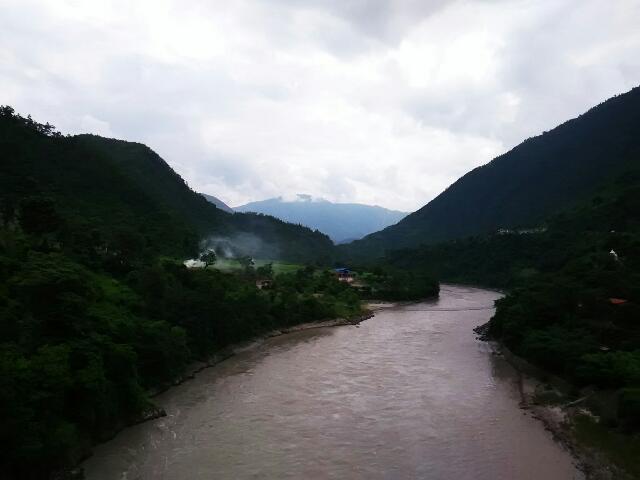
Most part of the day today was spent in traveling back to Kathmandu in preparation for the next phase of our journey. We have had the fun, we have enjoyed the external, we have tested our physical limits. Now time to focus more internally. To get us going in this sadana that we will be undertaking, we stopped at the Manakamna temple on the way to Kathmandu. The Manakamna temple is one of  the highly revered place of worship for Hindus in Nepal where Goddess Bagavati (Parvati) is worshipped as the wish fulfilling goddess (Mana meaning mind, Kamana meaning what one desires). In her most benevolent and graceful form, she sits on top of a big hill which is about 700 metres journey up in a cable car. The way up presents beautiful views of the Gandaki snaking below alongside the mountains, and the dense forests of the mountain Manakamna resides on. The entire 20 or so minutes it takes to make it to the top is filled with wonder and delight as one tries to take in the entire 360 degree view offered by the glass covered cable car.

Today being the Varamahalakshmi Pooja will be a grand occasion back home. I woke up with a slight feeling of nostalgia as I thought of my MIL having to do all the preparations herself without me to help around and the Goddess being worshipped at home. But as her grace would have it, I am here at Manakamna to receive her blessings, here far away from home. And we never planned to coincide these two occasions - it has happened purely by her wish. One is filled with gratitude as one feels the presence of the Shakti continuously keeping us in her folds through out this trip to Nepal so far. I have surrendered myself completely to her and I feel like a child of the universe totally for the first time in my life. The mother will take care.


Thursday, August 11, 2016

Day 5: Hiking to the Apple capital of Nepal

Marpha, a cute little village nestled between the Dhaulagiri and Nilgiris peaks of the Annapurna, is about an hour or two walk from Jomsom. It is considered the Apple capital of Nepal as the main crop cultivated here are Apples grown on the banks of the Kali Gandaki. The entire hiking trail is dotted with Apple farms as one walks peacefully from Jomsom without any exertion whatsoever owing to the relatively flat lands enroute. This being the start of the season for Apples in these parts, it was also a great sight to behold as we saw every tree on the path ladden with the Green and Red fruits in various stages of ripening. One could even pick a fruit or two off the tree and eat on the way with only the Kali for witness as most farms were deserted and void of any human vigilance.

As my luck would have it, we got ourselves a Vegetable vendor (who was going to pick his produce from Marpha to sell at Jomsom) as our porter/guide. One could also hire a bike or take the local bus and reach Marpha in under 20 minutes but considering the fine weather, we decided to hike all the way. Our porter, it turned out, was a great talker and he kept chatting all the way whenever I fell in line with him. Thanks to him, we reached Marpha in what seemed like just 30 minutes.

The tiny village was a sweet surprise right from the word go. As with almost all towns here, the outskirts of Marpha had a monastery and prayer wheels welcoming us. The town, shaped in a kind of semi circular shape curving away from the main road, was straight from an exotic vacation postcard. Narrow pathways lined with pavement stones, flowing water underneath, stone houses attached closely to each other on either sides, flat roofs stacked with wood, and a sense of peace and calm that one could never find anywhere else in the world. Oh, heavens! As with my previous post, it would be better if the pictures do the talking.

But before that, I must let you in on a secret jaunt of mine to the Horticulture department in the area in the guise of an Apple farm visit. You see, I made our porter promise me to take me shopping with him when he goes off to buy his goods. And my specific request to him was to get me as many seeds as possible. The kind man that he was, he not only took me to the Horticulture dept (aka Apple farm aka Vegetable Garden aka Market), he also introduced me to the officials. An hour or so of great talking ensued with me emploring them for all kinds of seeds while they kept going off track chatting about their experiences of India. At one point, they even got highly amused at my eagerness to get seeds from Nepal to India (meaning what seeds do you want to take all the way from here to Bangalore that you won't get in India was their question). I finally managed to convince them to sell me some seeds after making them understand the difficulty of getting pure native seeds (they don't usually sell any seeds though; the seeds were for their own growing in the dept garden). I walked away a happy customer with a quarter kilo seeds each of Mustard Sag (a special kind of leafy green with huge leaves), Nepali Radish (which grows 2 or so foot long) and Swiss Chards. Now I just can't wait to get back home to get them going in my balcony.
It's totally another concern whether customs at the Indian airport will allow it!!!

Day 4 Part 2: By the Kali in search of Shaligrams

The Kali Gandaki river is one of the main sources of water in Nepal and is also a tributary to Ganga when it joins the latter in Bihar in India. The river, also called Narayani, has been mentioned in many puranas. But in India, one is most likely to have heard of the name Gandaki with reference to Shaligrams. Shaligrams, which when scientifically defined are but fossilised stones and remains from a million years ago, are worshipped as the very representation of Vishnu and considered highly sacred and revered by Vaishnavaites. They are to be found only in the Kali Gandaki river, specifically where the Gandaki is accessible at Kagbeni and further upstream in the forbidden kingdom of Upper Mustang (where the other sacred place of Damodar Kund is also present along with thousands of years old cave temples and palace/forts of kings of yesteryears). The Gandaki is supposed to originate from a glacier at the outer borders of Upper Mustang where the Himalayas lead to the Tibet. Some even speculate that the great Manasarovar at Tibet may be one of the sources of the river. And the Shaligrams themselves originate somewhere near Damodar Kund and get washed downstream. I also heard from a trekker I met at Ekalabhatti (where we stopped for lunch on way up to Kagbeni) that Shaligrams are found in abundance near Yara, another place at Upper Mustang. Well, tempting though it is to imagine going there, the permit required to go to Upper Mustang costs about 500 USD per person and involves getting permission from the immigration department as well. And it's tough terrain, very tough that requires at least 5-6 porters to accompany a troupe to carry tents, cooking essentials, etc. So perhaps another year in the future!

Coming back to Shaligrams, there's a nice story or Purana on how they came about and what they mean - do check it out on Google. And while at that, do read about the River too - I find it extremely fascinating.

My early growing years have been witness to the worship of Shaligrams almost everyday by my grandfather. A very pious and religious man, he never skipped a single day to take care of the Shaligrams (which he had got by himself when he went to the Nepal yatra in early 1980's; am not sure if he already had some through inheritance from his father) - he took care of them as if they were a living breathing mini incarnation of the very God he worshipped. His morning rituals started with an elaborate procedure (after bath) of wearing the 12 thirumans across his body including the forehead while repeating mantras and the 24 names of Vishnu followed by  Sandhyavandanam (recitation of Gayatri Mantra) and Surya Namaskaram. He then entered the Kitchen (which is where we almost always had our place of worship at home) and started his daily Pooja to the Shaligrams - with an offering of Tulasi water and a complex ritualistic bathing of the Shaligrams. Unfortunately I never observed what he did exactly. I just remember his fast hand movements and lip movements as he lost himself in the worship/procedure. During this entire time (perhaps of about 45 to 60 minutes), one must never disturb him or even touch or brush against him. Even if one were to do so by accident, I remember days when he used to take bath again and repeat the entire procedure! The worship ended when he came out of the room and gave us the prasad of Tulasi water which has been offered to Shaligrams (i.e. Only if one has taken bath). One could then breath easy and start making noises, run around the house, climb over her grandpa, pull his ears, tickle his tummy and make all kind of merry. Till then, one must remain a silent and quiet child. I guess I was to most extent :)

Well, the past few months, especially the weeks ahead of my trip, I have been constantly thinking of the Kali Gandaki and her gifts of Shaligrams. I have been imagining myself by her side, looking for the mini incarnations of Vishnu myself - as in a far off corner of mind, I feel they will bring me closer to my grandfather. Well that's another direction I don't want to go to now. However, suffice it to say that it is something that I consider very dear though I know not how to take care of the Shaligrams by myself. One can learn though, yes? But then one must find them first at Gandaki! And today it came to be.

Here, take a look at the short video I shot during the three or so odd hours that I spent on the Gandaki bed at Kagbeni. As she rushed past fast and furious, mysterious of her depths owing to the dark grey/black color, I spent what I think will be one of the most memorable time of my life. Loads of excitement, a bit of fear, fast blowing wind, and an one track mind to spot the dark black stones amidst the million strewn on the bed....indeed makes for the best time of one life :)

Tuesday, August 9, 2016

Day 3 Part 2: For the love of the Kali Gandaki river and Upper Mustang

Our tiny 15 seater flight landed at Jomsom airport smoothly. To call it one of my best flying experience would be an understatement. After entering our details at the Airport register, we got ourselves a porter to act as our guide and help carry our backpacks as the trek/hike up to Kagbeni is long and steep in places (moreover we weren't really confident if our random preparations for the trek in the last few months were enough). Kagbeni is a nice mid point to Muktinath (about 8 or so kilometres distance from Jomsom) and we wanted to take a day and break journey at this village to let our body get used to breathing with less oxygen dense air as we will be gaining altitude steadily through the day. Not to mention Kagbeni is also the place where you can stroll by the banks of the Kali and seek Shaligrams if you so wish. Something that I dearly wanted to do.

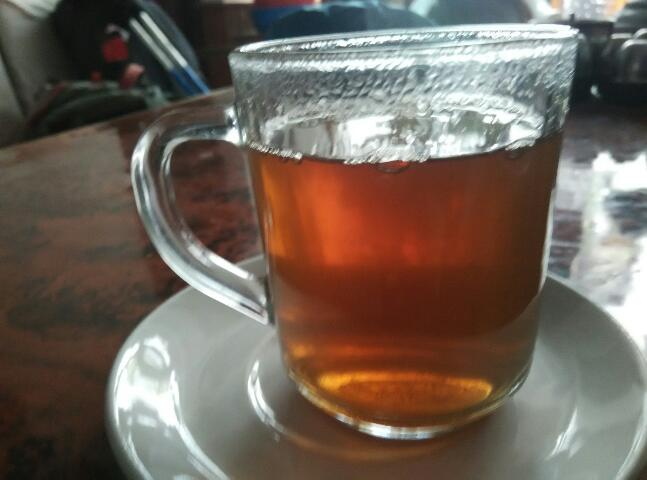
We set off without further delay from Jomsom after a quick black Tea (to help in acclimatisation) following the Kali Gandaki upstream towards her place of origin, the Upper Mustang. Soon, we left the town far behind as we walked on the banks of the Kali and moved uphill and down - with the river for company all the time. This is where I am going to suspend my belief that I can put everything into words. Because somethings can't just be expressed at all - especially if you want the reader to get the same sense of wonderment and awe that you felt. Perhaps the pictures can do the talking - let's hope.

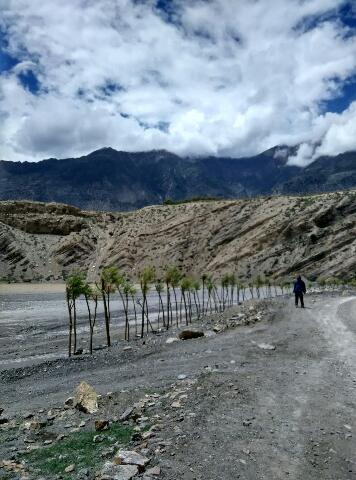
As we moved from mountain to mountain in the narrow walking path, a sense of disbelief started taking shape. How can there be so much beauty. And that too in an arid place as that of the Mustang route we are following. To a person who grew up thinking Nilgiris (of the Ooty fame), are the best on Earth, and the mountains are supposed to be lush green, the mountains we passed through the day was a stark contrast and a constant challenge of my beliefs and perceptions of beauty. Oh what a creation  - one can't help but start thinking about the creator and wonder at our own insignificance in this grand universe. Every turn in the path, every twist of the river, every change in direction revealed a new sense of wonder. Our entire trek during the day was simply powered by the beauty of the River and her accompanying mountains.

Here, take a look at the pictures. And it's my wish and hope that you get to experience this for yourself too.